
Marta Pérez García: Bearing Witness
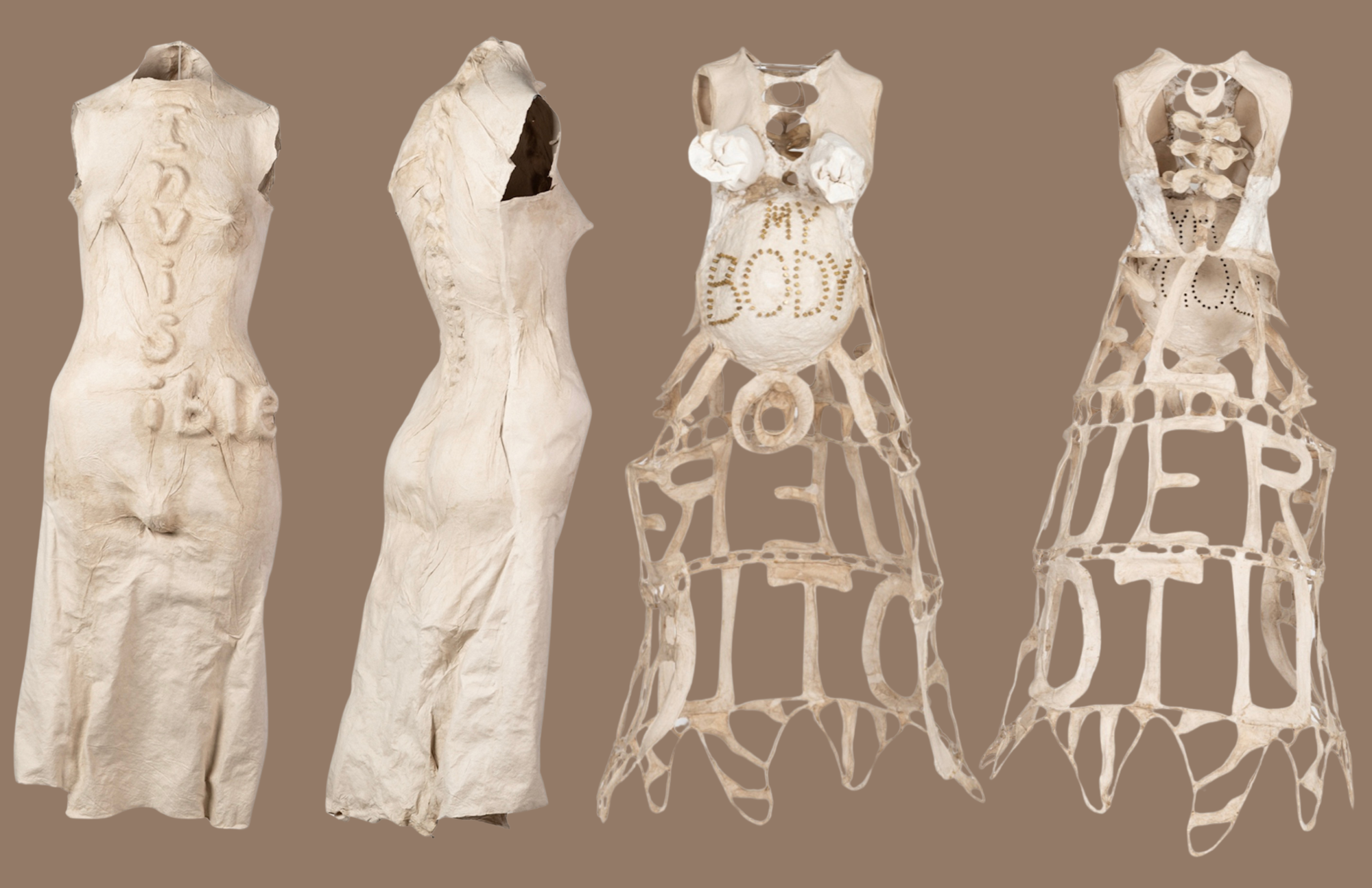
Marta Pérez García's sculptures will be on view from September 15th through October 15th in the HJ Patterson Atrium.
Additional Events
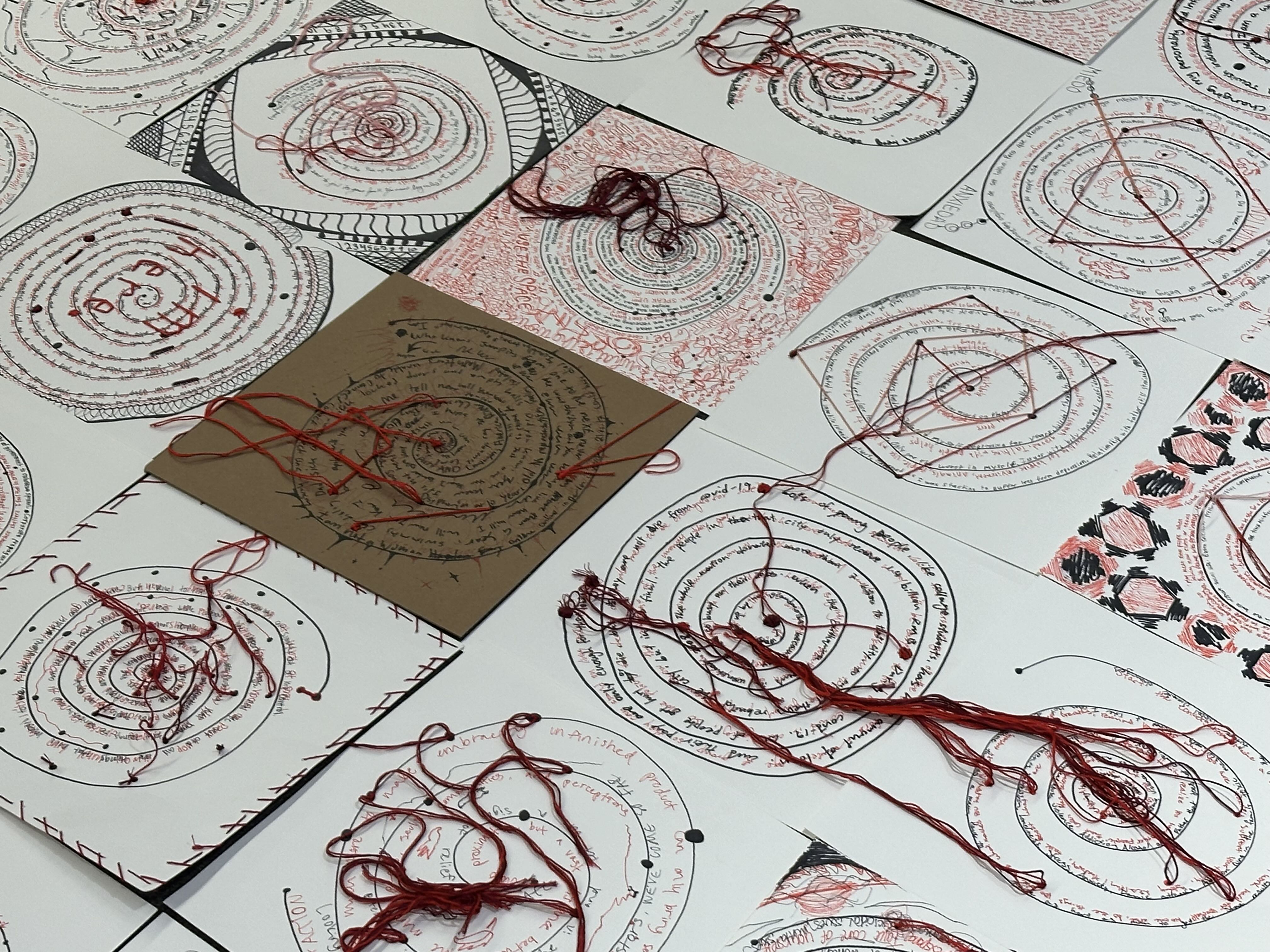
In addition to the exhibit, Marta Pérez García will hold several workshops:
Sept 15
1 - 4pm: drop-in Artist Workshop
4 - 5pm: NextNOW Fest Exhibition Opening
Sept 19
11:15 AM - 12:15 PM: Artist Workshop • Hyattsville Branch Library
*All events are in the HJP Atrium unless otherwise specified
The exhibit will run September 15 - October 15, 2026 in the HJ Patterson Atrium. All are welcome to visit during business hours.
Marta Pérez García began her series of sculptural female torsos, Restos-Traces, in response to the escalation of domestic violence against women during the COVID-19 pandemic. These myriad bodies–amorphous and skeletal, militant and maternal–honor the victims and survivors of gender-based violence everywhere but especially in Puerto Rico, where rates of femicide remain persistently high. “I think our survival stories are written on our bodies,” Pérez García reflects, and her torsos betray the psychic and physical scars of violence with intimacy and poignance. Constructed from handmade paper and inlaid with various materials, including metal wires, bones, and nails, the bodies both bear witness to the lingering trauma of their abuse and project new narratives of self-empowerment.
Based in Washington, DC, Pérez García has long addressed gender-based violence across her practice, which spans drawing, painting, printmaking, and multimedia installation. She received her BFA from Louisiana State University and her MFA from the Tyler School of Art and Architecture at Temple University. In 2018, she partnered with the DC Coalition Against Domestic Violence to lead workshops for survivors, which culminated in the exhibition, I’m Gonna Get You…Body, Woman, Rupture (Si te cojo…cuerpo, mujer, rotura), held at the city’s Franklin D. Reeves Municipal Center. Her work is represented in the collections of the Museo de Arte de Puerto Rico, The Phillips Collection, and the Library of Congress.
She shares a bit about her work below:
My work is grounded in social justice and civic engagement, driven by an enduring commitment to confronting gender-based violence and amplifying voices that have been marginalized, silenced, or erased. Through printmaking, sculpture, and installation, I investigate the ways power is inscribed upon women’s bodies while creating spaces for witnessing, dialogue, and collective reflection. Shaped by my own experience of abuse and informed by years of work alongside survivors and advocacy within women’s communities, my practice is both a personal act of reclamation and a public call for accountability and change. The reduction woodcut process serves as both methods and metaphor within my practice. As the woodblock is progressively carved away, layer by layer; an image emerges through a sequence of irreversible acts. This process mirrors experiences of loss, survival, and transformation, revealing how vulnerability and resilience coexist. The tension between destruction and creation becomes a visual language through which I explore the emotional, physical, and societal burdens borne by women while honoring their strength, agency, and capacity to endure. My installations extend these investigations into communal space. They invite audiences to move beyond passive observation and into active engagement, fostering conversations around gender-based violence, accountability, and shared responsibility. By creating environments that encourage reflection and connection, I seek to transform private experiences into public acts of recognition and empathy. Recently, sculptural papermaking has expanded the possibilities of my practice. The material’s fragility and strength resonate deeply with the narratives I explore. Through tactile, bodily forms, I examine memory, trauma, resilience, and testimony, creating works that embody presence and absence. Across all media, my work explores vulnerability, endurance, and transformation. I view art as a catalyst for awareness and connection: a space where difficult realities can be confronted, silenced stories honored, and possibilities for individual and collective change can emerge.
This exhibit is supported by the Latin American and Caribbean Studies Center and Co-Sponsors: The Indigenous Futures Lab; The Pepsi Enhancement Fund; Arts for All; the Department of Spanish and Portuguese; the Department of Art History and Archeology; the Department of American Studies; the Department of Art; UMD Art Gallery; CARE to Stop Violence; MICA; Stamp Art Gallery; Studio A; and the Department of Women, Gender and Sexuality Studies.